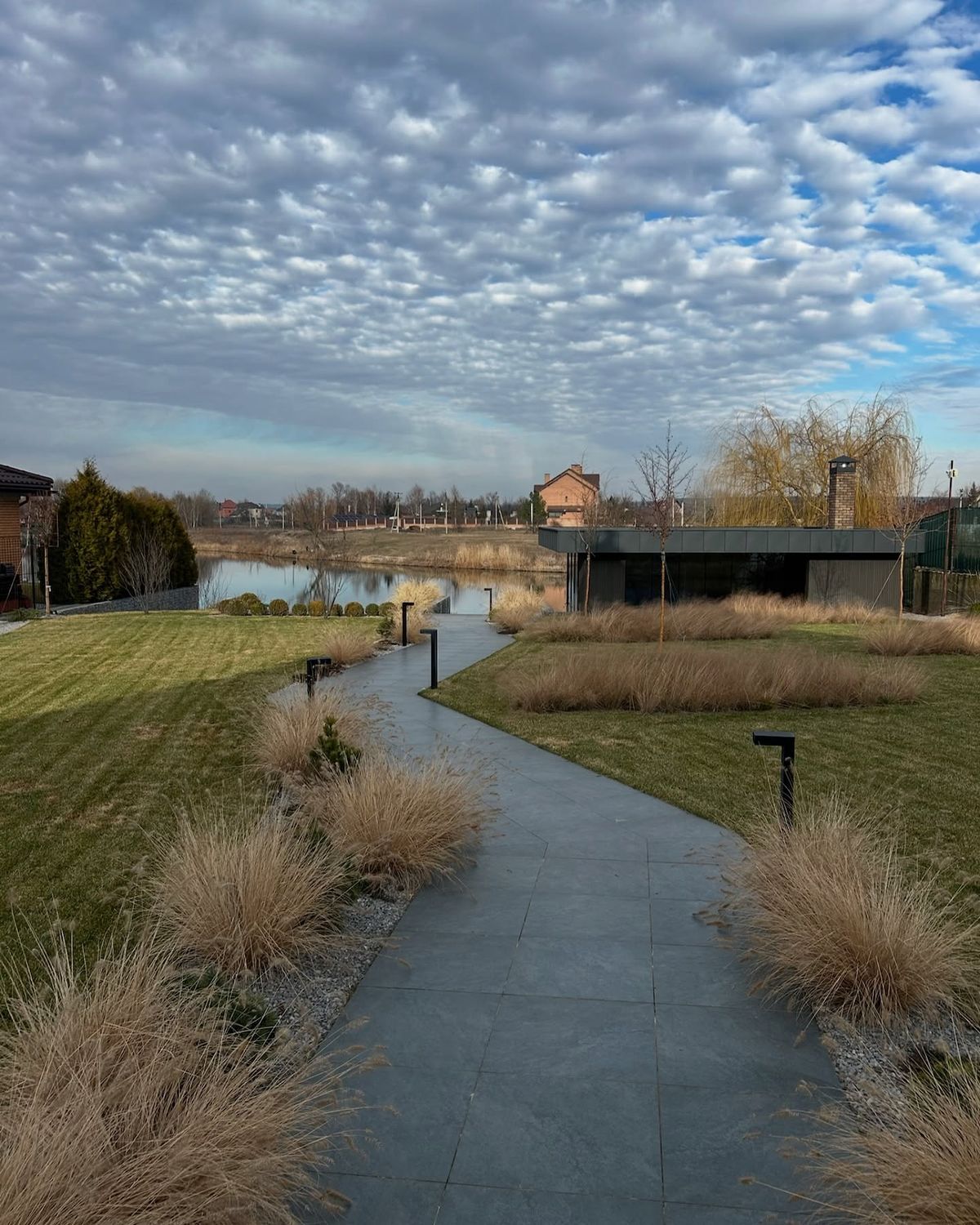
Is It Worth Investing in a Garden Today?
Not just for the sake of a beautiful picture, but to create a space where you want to live, relax, and unwind. Let's explore when investing in landscaping truly makes sense and how to create a garden without stretching your budget.
Quality of Life, Not Just Appearance. Morning coffee on the terrace, evening gatherings with family, or quiet moments surrounded by nature — it's more than aesthetics; it's about everyday comfort and quality of life.
Safety and Property Preservation. Flooding, slope erosion, unsafe steps, or hazardous trees near the house require timely attention. Delaying these improvements often leads to higher costs in the long run.
Phased Implementation Without Unnecessary Financial Pressure. A garden doesn't have to be completed in a single season. Thoughtful planning allows you to spread the investment over time while maintaining the integrity of the overall concept.
Long-Term Property Value. A well-designed landscape, effective drainage, and carefully selected plants help preserve the site, protect the house, and create an outdoor space that becomes even more beautiful and distinctive over the years.

In uncertain times, we especially need a place that follows its own rhythm, independent of the constant flow of news. Research in environmental psychology suggests that spending time surrounded by greenery helps reduce fatigue and emotional stress. While it is not a substitute for professional support when needed, it can be an important resource for everyday recovery. For many people, a garden becomes a place where, after a demanding day, they can finally find peace and quiet.
How to Invest Wisely Without Doing Everything at Once
1. Start with a Design, Not Implementation
The cost of landscape design is significantly lower than the cost of implementation, yet the design defines the essentials: what needs to be done, where, and in what sequence. This ensures that every investment contributes to the overall concept rather than going towards isolated solutions that may later need to be changed or redone.
2. Divide the Work into Stages
There is no need to implement the entire garden at once. A well-planned sequence of works allows you to distribute the budget while avoiding unnecessary expenses:
- First — safety and engineering infrastructure: drainage, grading, steps, and fencing.
- Next — functional outdoor living areas, terraces, and landscape structures.
- Finally — planting, lighting, and decorative elements.
3. Choose Plants According to Site Conditions
Plants should be selected according to the local climate, soil type, sunlight exposure, and other site-specific conditions. The right selection adapts better to the local environment, requires less intervention, and maintains its ornamental value for longer. Even among low-maintenance species, there are plenty of interesting options with distinctive textures and seasonal colour changes.
4. Plan for Greater Autonomy
A garden should remain functional and comfortable under different circumstances. An automatic irrigation system with soil moisture sensors, rainwater harvesting, and backup power for lighting can help reduce dependence on external resources and utilities.
5. Give the Garden Time to Flourish
A garden does not need to be fully established in its first season. Even the initial stage can create a cohesive landscape: defined zones, a lawn, and key compositional features. Over time, plants take root, gain volume, mature, and gradually bring the original design vision to life. A thoughtfully designed garden only becomes more expressive with time.
A garden cannot solve every problem. But it can create a place where they are easier to live through.